
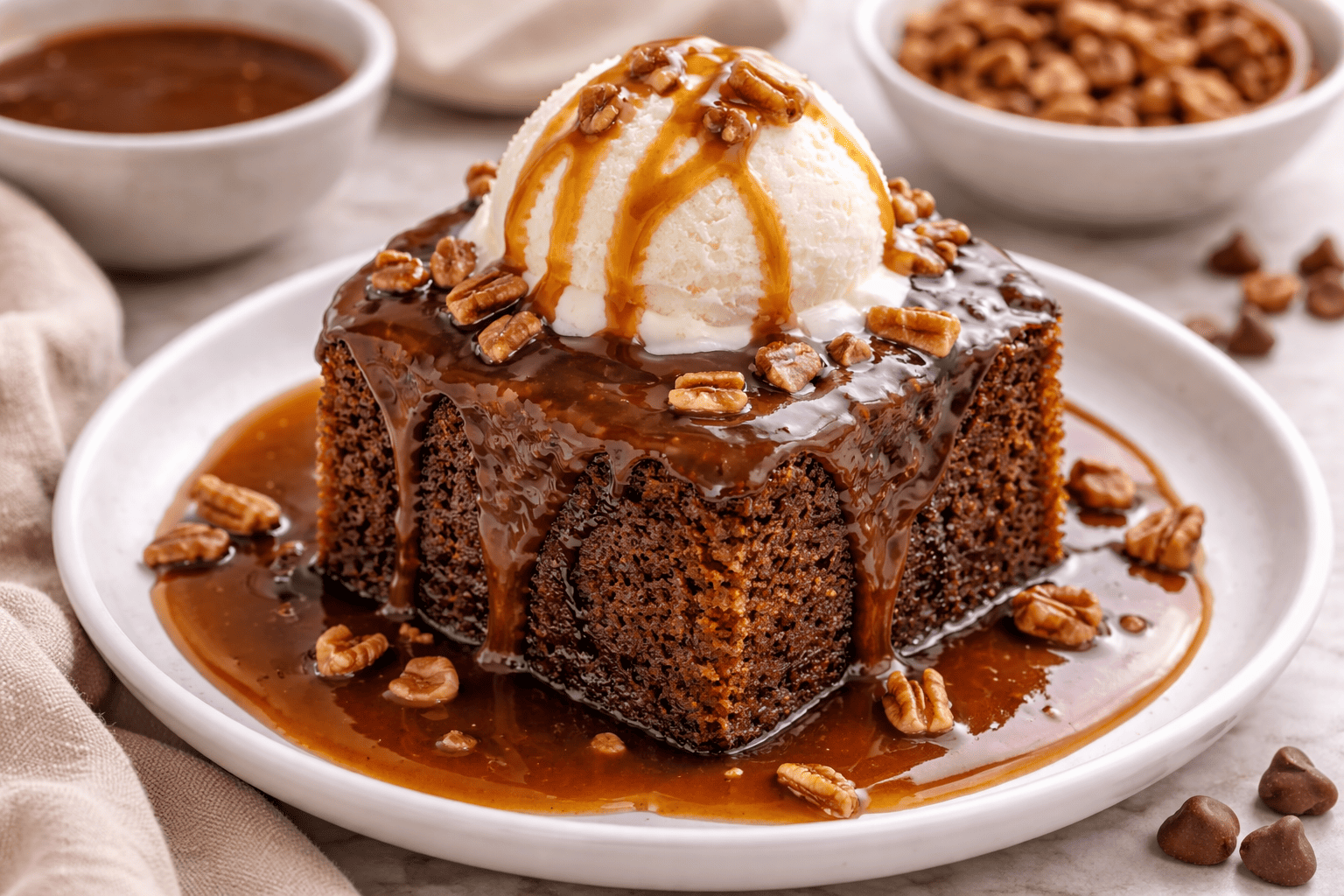
There is a particular kind of dessert that transcends its humble origins and becomes something almost universally beloved — sticky rice with mango has done it across Southeast Asia and far beyond, turning a simple combination of ingredients into a dish people seek out specifically and remember long after the meal is over. Sticky toffee pudding has done the same thing for British cuisine: taken a modest sponge cake soaked in a rich caramel sauce and turned it into one of the most comforting, crowd-pleasing desserts in the English-speaking world.
If you have never had a proper sticky toffee, you owe it to yourself to change that immediately.
What Is Sticky Toffee Pudding?
In British culinary vocabulary, “pudding” refers broadly to dessert rather than specifically to a creamy, spoonable custard. Sticky toffee pudding is a warm, dense sponge cake — moist and dark — made with finely chopped dates and drenched in a buttery toffee sauce that soaks into the crumb and pools around the base. It is served warm, typically with extra toffee sauce poured over the top, and accompanied by vanilla ice cream, clotted cream, or custard.
The result is deeply, unapologetically rich. The dates dissolve almost entirely into the batter during mixing, contributing sweetness and a fudgy density without asserting themselves as a distinct flavor. Many people who claim not to like dates eat sticky date pudding with great enthusiasm, entirely unaware of what makes it so moist and complex.
A Brief and Contested History
The origins of toffee pudding are debated with the particular passion that the British reserve for questions of culinary heritage. Several establishments in the Lake District claim to have invented or popularized it in the 1970s, most notably the Sharrow Bay Country House Hotel, whose chef Francis Coulson is frequently credited with bringing the dish to wider attention. Others point to earlier Canadian influences or wartime recipes that predate the Lake District versions by decades.
What is not debated is the outcome: sticky toffee pudding cake became a fixture of British restaurant menus through the 1980s and 1990s, eventually crossing into pub food, home baking, and supermarket ready-meal culture, where it has remained a dominant presence ever since.
The Recipe: Simpler Than You’d Expect
For a dessert that tastes this luxurious, sticky pudding toffee is remarkably straightforward to make at home. The sponge begins with dates soaked in hot water or hot tea with a small amount of bicarbonate of soda, which softens them and helps break them down when beaten into the batter. Butter, sugar, eggs, flour, and a touch of vanilla round out the cake itself.
The toffee sauce is even simpler: butter, dark brown sugar, and heavy cream, cooked together in a saucepan until thickened and glossy. A generous amount gets poured over the hot cake straight from the oven; the rest is kept warm to serve alongside. Some bakers poke holes in the top of the sponge before adding the first pour of sauce, allowing it to penetrate deeper into the crumb for an even more saturated result.
The cake can be baked in a single large pan and cut into portions, or made in individual ramekins for a more elegant presentation. Both approaches produce wonderful results, though the individual portions reheat particularly well and make dinner parties considerably easier to manage.
Variations Worth Exploring
The classic version is hard to improve upon, but the format is flexible. Adding a tablespoon of black treacle to the batter deepens the color and adds a slightly bitter, molasses-forward note that balances the sweetness of the sauce beautifully. A pinch of ground ginger or mixed spice in the sponge gives the whole thing a warmly spiced quality that suits cold weather especially well.
Some modern versions incorporate espresso into the toffee sauce, which adds depth without tipping the dessert into coffee territory. Others finish the dish with a scattering of flaky sea salt over the warm sauce, which is a simple addition that makes a genuine difference.
A Dessert That Never Disappoints
Sticky toffee is not a subtle dessert. It makes no apologies for its richness, its warmth, or its ambition to be the best thing on the table. In that, it always succeeds.