
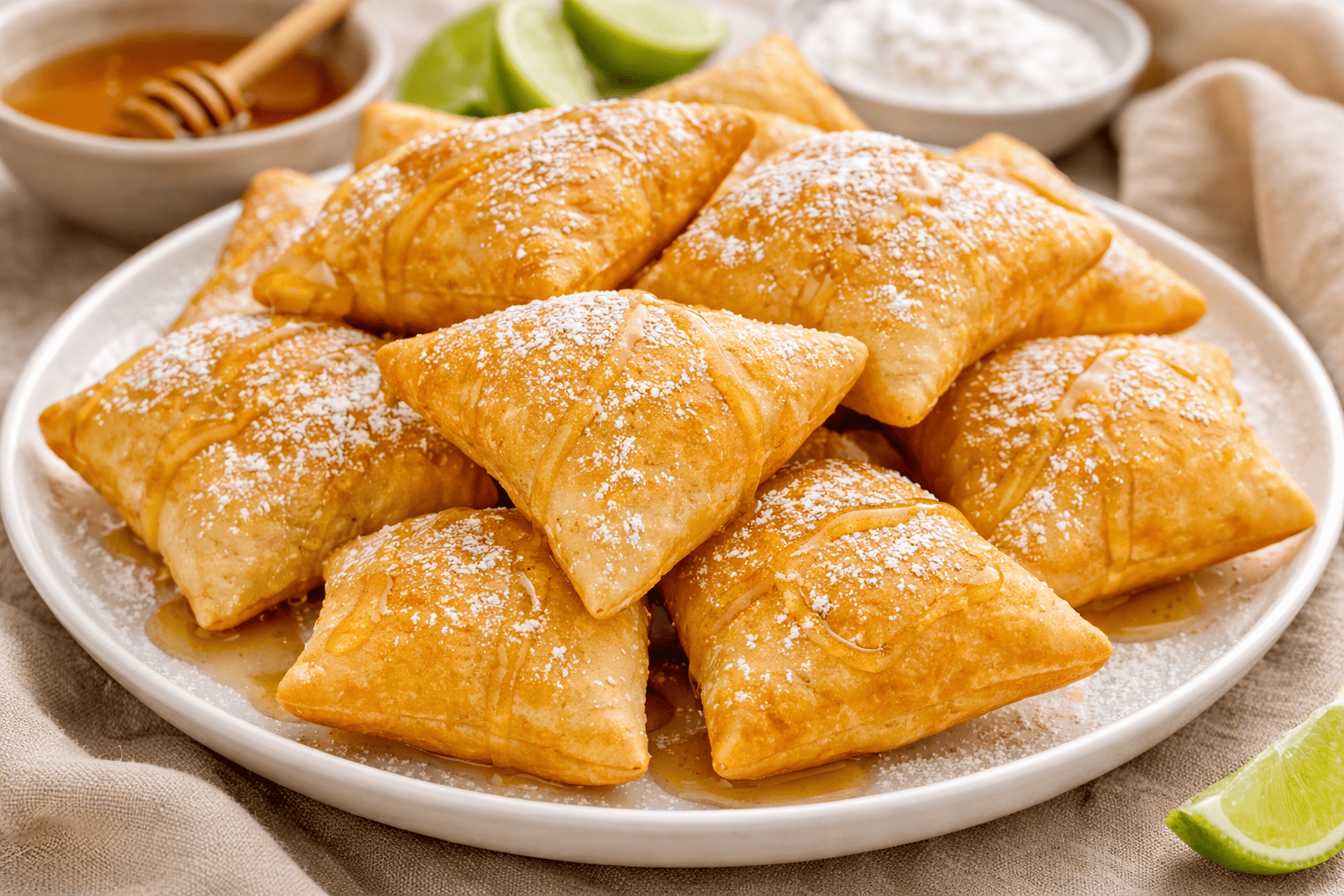
There is a particular kind of dessert that operates entirely on warmth — not just temperature, but feeling. Chess pie has it: that quality of something made without pretension, designed to satisfy completely and leave nothing unresolved on the plate. Sopapilla has it too, perhaps more than almost any other fried dough in the American culinary tradition. Puffy, golden, hollow in the center, served with honey and dusted with cinnamon sugar, it is a dessert that asks very little of the person eating it except full attention and genuine appreciation.
Once you have had a good one, you will understand the devotion immediately.
What Is a Sopapilla?
A sopapilla is a piece of fried dough made from a simple unleavened or lightly leavened dough, cut into squares or triangles and dropped into hot oil, where it puffs dramatically into a hollow pillow with a crisp, blistered exterior and an airy interior. The name comes from the Spanish word for a type of fritter, and the dish has roots that extend back through New Mexican and broader Southwestern cuisine to the fried dough traditions brought to the Americas by Spanish colonists, themselves drawing on Moorish culinary influences that stretch back centuries further.
In New Mexico, sopapillas are treated as seriously as bread — served alongside savory meals, stuffed with beans and meat, or eaten as dessert with honey. In Texas and much of the broader Southwest, the dessert version is the dominant form: hot from the oil, drizzled with honey, and consumed immediately before the crispness fades.
The Dough: Simple Ingredients, Careful Handling
A homemade sopapilla dough is built from pantry staples: flour, a small amount of fat — traditionally lard, though butter or shortening work well — a leavening agent, salt, and warm water or milk. The dough is mixed until just combined, rested briefly to relax the gluten, then rolled thin and cut into portions. The resting step is important; dough that hasn’t rested will spring back during rolling and resist the uniform thinness that produces the best puff in the oil.
The puffing is the result of steam trapped inside the dough as it hits hot oil. When conditions are right — oil at the correct temperature, dough at the right thickness — each piece swells within seconds into a golden pillow. If the oil is too cool, the dough absorbs it and becomes greasy rather than puffing. If it is too hot, the exterior browns before the interior has time to expand. The target temperature is around 375°F, and a reliable thermometer makes all the difference.
Sopapilla Mix: A Shortcut Worth Knowing
For cooks who want the result without the full process, sopapilla mix — available in many Southwestern and Mexican grocery stores, as well as online — provides a reliable shortcut. The dry mix typically contains pre-measured flour, leavening, and salt, requiring only the addition of water and a short rest before rolling and frying. The results are genuinely good, and the convenience makes sopapillas accessible on a weeknight rather than just a special occasion project.
Mexican Sopapilla and Regional Variations
The mexican sopapilla tradition encompasses significant regional variation. In some areas, the dough is made with anise seed for a faintly licorice-tinged flavor that pairs beautifully with honey. In others, piloncillo — unrefined cane sugar with a rich, molasses-forward flavor — is dissolved into a syrup for dipping rather than using plain honey. Cinnamon sugar dusted over the hot surface is nearly universal, as is the instruction to eat them as quickly as possible after they come out of the oil.
Sopapilla Ice Cream: The Modern Pairing
The combination of sopapilla ice cream — a warm, freshly fried sopapilla served alongside or beneath a scoop of vanilla ice cream, often finished with honey and cinnamon — has become a fixture of Tex-Mex restaurant dessert menus, and for good reason. The contrast between the hot, crisp dough and the cold, melting ice cream is as effective here as it is in any skillet cookie or warm brownie situation. The honey ties everything together, providing sweetness and floral complexity that lifts the whole plate.
A Dessert of Honest Pleasures
Sopapilla does not ask for your admiration. It asks for your hunger and your presence, and in return it delivers something warm, golden, and genuinely satisfying every single time.