
There are desserts that dazzle with layers, glazes, and decoration — your eclairs, your mirror-glaze cakes, your towering confections built for the ‘gram. And then there is chess pie: modest in appearance, devastatingly good in flavor, and quietly beloved across the American South for centuries. If you’ve never made one, it’s time to fix that.
What Exactly Is Chess Pie?
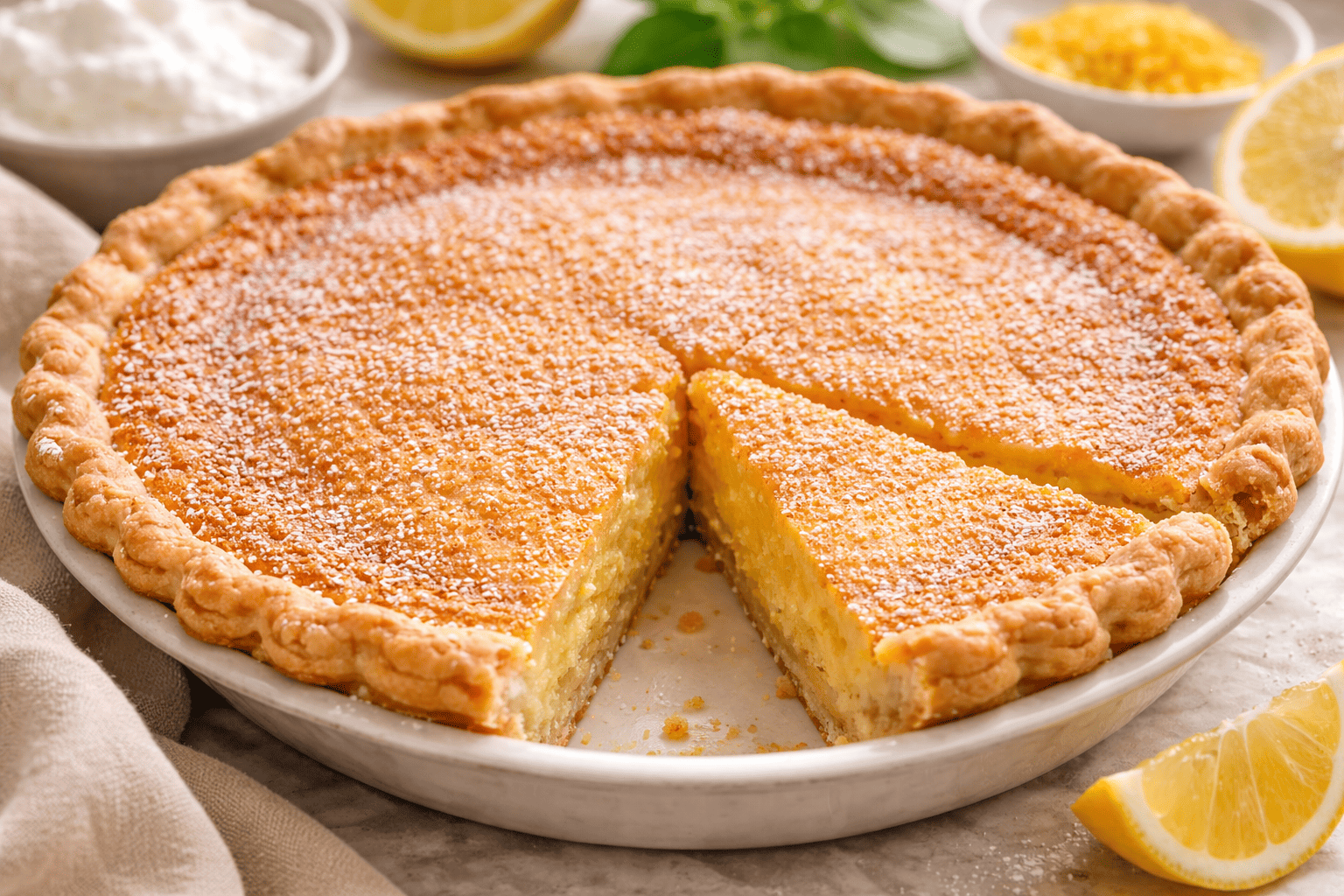
Chess pie is a single-crust custard pie made from a short list of pantry staples: butter, sugar, eggs, and a small amount of flour or cornmeal. The result is a dense, silky, golden-topped filling with a slightly crisp surface and a rich, almost candy-like interior. It’s simpler than it looks and more complex than it tastes — in the best possible way.
The origin of the name is the subject of friendly debate. One popular theory holds that a cook, when asked what kind of pie she’d baked, replied, “Oh, it’s jes’ pie” — and the name stuck. Another account suggests the name comes from “cheese pie,” a nod to its British custard tart ancestors, the word gradually shifting over generations. Whatever the truth, the pie has earned its place in Southern culinary history many times over.
A Pie with Variations for Every Palate
One of the joys of chess pie is how endlessly adaptable it is. The base recipe is nearly foolproof, which makes it a perfect canvas for flavor experimentation. Home bakers across the South have been spinning out chess pie recipes for generations, passing them down through handwritten recipe cards and well-worn church cookbooks.
The most beloved variation is undoubtedly chocolate chess pie. Swap in a few tablespoons of cocoa powder or melted dark chocolate, and the filling transforms into something fudgy, brownie-like, and deeply satisfying. It bakes up with a slightly crackled top and an interior so dense it practically melts when you fork into it. Serve it barely warm with a scoop of vanilla ice cream, and you’ll understand why people get sentimental about it.
On the opposite end of the flavor spectrum sits chess lemon pie, which cuts through the sweetness with a bright, tart citrus note. Fresh lemon juice and zest lift the custard entirely, giving it a sunshiny quality that makes it feel equally at home at a summer picnic or a holiday table. It’s the kind of pie that makes people ask for the recipe before they’ve finished their slice.
The Art of Baking Chess Pie
Despite its reputation as a simple pie, chess pie does have a few quirks worth knowing. The filling tends to puff dramatically during baking and then sink back as it cools — this is completely normal and nothing to worry about. A slight jiggle in the center when you pull it from the oven is a good sign; it will set as it cools to room temperature.
Cornmeal is a traditional addition that gives the filling a very subtle texture and helps it set properly. Some chess pie recipes call for a splash of white vinegar, which balances the sweetness and adds a gentle tang without being detectable as vinegar. Don’t skip it if the recipe asks for it.
The pastry shell should be partially blind-baked before adding the filling to prevent a soggy bottom. Use pie weights or dried beans, bake for about 15 minutes, then add the custard and finish baking low and slow — around 325°F — until just set.
A Note on That Name: Chessboard Pie?
You may occasionally see chess pie referred to as chessboard pie, which is a regional variation on the name rather than a different recipe. In some communities, the term was used to describe the same basic custard pie, sometimes with a decorative scored top that vaguely resembled a chessboard grid. The naming history is tangled, but the pie is the same: buttery, sweet, and deeply satisfying.
Why Chess Pie Deserves More Attention
In an era when dessert trends move fast, chess pie asks nothing of you except a willing fork. It requires no special equipment, no rare ingredients, and no advanced technique. It’s the kind of recipe that rewards new bakers and reminds experienced ones why simple things done well are always enough. Whether you make the classic version, venture into chocolate chess pie territory, or brighten things up with chess lemon pie, you’re carrying forward a tradition worth keeping.
Bake one this weekend. You’ll be glad you did.